
Radon Testing NJ | Radon Inspection Hawthorne
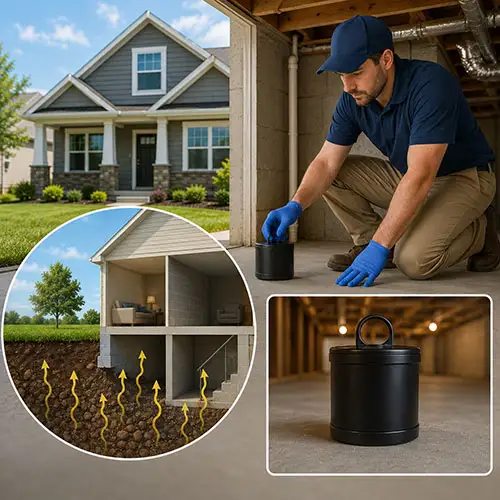
Radon Testing in Hawthorne, NJ — Protect Your Family from New Jersey's Hidden Risk
Radon is a colorless, odorless radioactive gas that forms naturally from the breakdown of uranium in soil and rock. It seeps up through the ground and into homes through foundation cracks, slab penetrations, and basement openings. Once inside, it accumulates and at elevated concentrations, it’s the second leading cause of lung cancer in the United States.
New Jersey is one of the higher-risk states for radon. Northern NJ including Passaic, Bergen, and Morris County has significant geological formations that produce radon. According to the NJ Department of Environmental Protection, a meaningful percentage of NJ homes test above the EPA action level of 4 picocuries per liter (pCi/L). The only way to know if your home is affected is to test.
When Should You Test for Radon?
- When buying a home radon testing is standard practice for home purchases in NJ
- If you’ve never tested your current home especially if you have a basement or lower living areas
- After major home renovations or changes to HVAC systems
- If your home’s radon mitigation system has been serviced or modified
- Every two years in elevated-risk areas, as levels can change over time
Our Radon Testing Process
1
We place a certified continuous electronic radon monitor in the lowest livable area of the home, typically the basement or ground floor
2
The monitor runs for a minimum of 48 hours, capturing readings throughout the testing period.
3
Results are delivered digitally with your home inspection report or as a standalone radon report.
4
We explain your results in plain language and advise on next steps if levels exceed the EPA action threshold.
Call Today For A Free Estimate
What If My Radon Level Is High?
An elevated radon reading does not mean the home is uninhabitable or that you can’t proceed with the purchase. Radon mitigation systems are effective, relatively affordable, and can typically reduce levels to well below the EPA action threshold. A qualified NJ radon mitigation contractor can install a sub-slab depressurization system that permanently addresses the problem.
We will point you toward accredited NJ radon mitigation resources if your test results require it. We do not perform mitigation ourselves , our role is accurate testing and clear reporting.
Frequently Asked Questions - Radon Testing in NJ
What is the EPA action level for radon and what does it mean for NJ homes?
The U.S. Environmental Protection Agency recommends taking action to reduce radon in your home if levels reach or exceed 4 picocuries per liter of air, commonly written as 4 pCi/L. Below 2 pCi/L is considered low risk. Between 2 and 4 pCi/L, the EPA suggests considering mitigation. At 4 pCi/L and above, the EPA recommends mitigation. New Jersey’s northern counties including Morris County, which is EPA Zone 1 have a higher-than-average percentage of homes testing above this threshold. Morris County’s average user-submitted radon reading is approximately 8 pCi/L, which is twice the EPA action level. Passaic and Bergen County homes fall into EPA Zone 2, where meaningful percentages of homes still test above the action level. The only way to know your specific home’s level is to test.
How long does radon testing take and when do I get results?
We use an electronic continuous radon monitor, which is placed in the lowest livable area of the home typically the basement or ground floor. The monitor runs for a minimum of 48 hours, capturing readings continuously throughout the test period rather than just at one point in time. This continuous monitoring method is significantly more accurate than passive charcoal canister tests, which only capture a snapshot. Your radon test results are included in your inspection report, delivered electronically the same day the monitor is retrieved. We explain the results in plain language and advise clearly on what the numbers mean for your specific situation.
What happens if my radon level comes back above the EPA action level?
An elevated radon result does not mean the home is unsafe to purchase or that you cannot proceed with the transaction. Radon mitigation is a well-established, effective process. A qualified NJ radon mitigation contractor installs a sub-slab depressurization system essentially a pipe and fan that draws radon from below the slab and vents it outside before it can accumulate indoors. This system typically reduces radon levels to well below the EPA action threshold and costs between $800 and $1,500 in most NJ residential applications. We provide radon results with full context and can point you toward accredited NJ radon mitigation resources. Some buyers use an elevated radon result to negotiate mitigation costs with the seller before closing.
Is radon testing required by law when buying a home in NJ?
New Jersey does not legally require radon testing as a condition of a home sale. However, the NJ Department of Environmental Protection strongly recommends testing for all real estate transactions statewide, and most experienced NJ real estate attorneys advise buyers to include radon testing in their inspection contingency. Radon testing is now considered standard practice in NJ home purchases particularly in northern counties where the geological conditions create elevated risk. Skipping radon testing to save the cost of the test is a risk that is rarely worth taking given what elevated radon exposure means for long-term health.
Can radon levels change over time in the same home?
Yes. Radon levels in a home are not fixed they can vary with seasons, changes to the home’s foundation or HVAC system, and shifts in soil conditions beneath the property. Winter levels are typically higher than summer levels because homes are closed up and ventilation is reduced. A test performed in one season may not accurately reflect levels at another time of year. For this reason, the EPA recommends retesting every two years, after any major renovation affecting the foundation or HVAC system, and whenever a radon mitigation system is serviced or modified. A single test during a home purchase gives you the information you need at that point in time ongoing awareness is part of responsible homeownership in a state with NJ’s geological profile.
How accurate is an electronic radon monitor compared to a charcoal canister test kit?
Electronic continuous radon monitors are significantly more accurate than passive charcoal canister test kits for several important reasons. Charcoal kits capture radon levels over a short exposure period and represent a static snapshot they can be affected by open windows, HVAC operation, and normal fluctuations during the test period. Electronic continuous monitors record radon levels at regular intervals throughout the full 48-hour test period, producing an average that reflects true conditions more reliably. They also produce a tamper-evidence log showing readings over time, which is important in real estate transactions where there can be pressure on test conditions. We use professional-grade electronic continuous monitors for every radon test the same equipment used by certified radon measurement professionals across NJ.
Ready to Book Your Inspection
Getting started is simple. Call or text us anytime at (201) 349-5655, or use the form below to request a date and time. We respond within the hour during business hours and are available for urgent same-day scheduling.